ServicesWhole-Home Filtration
Whole-Home Filtration in Peoria
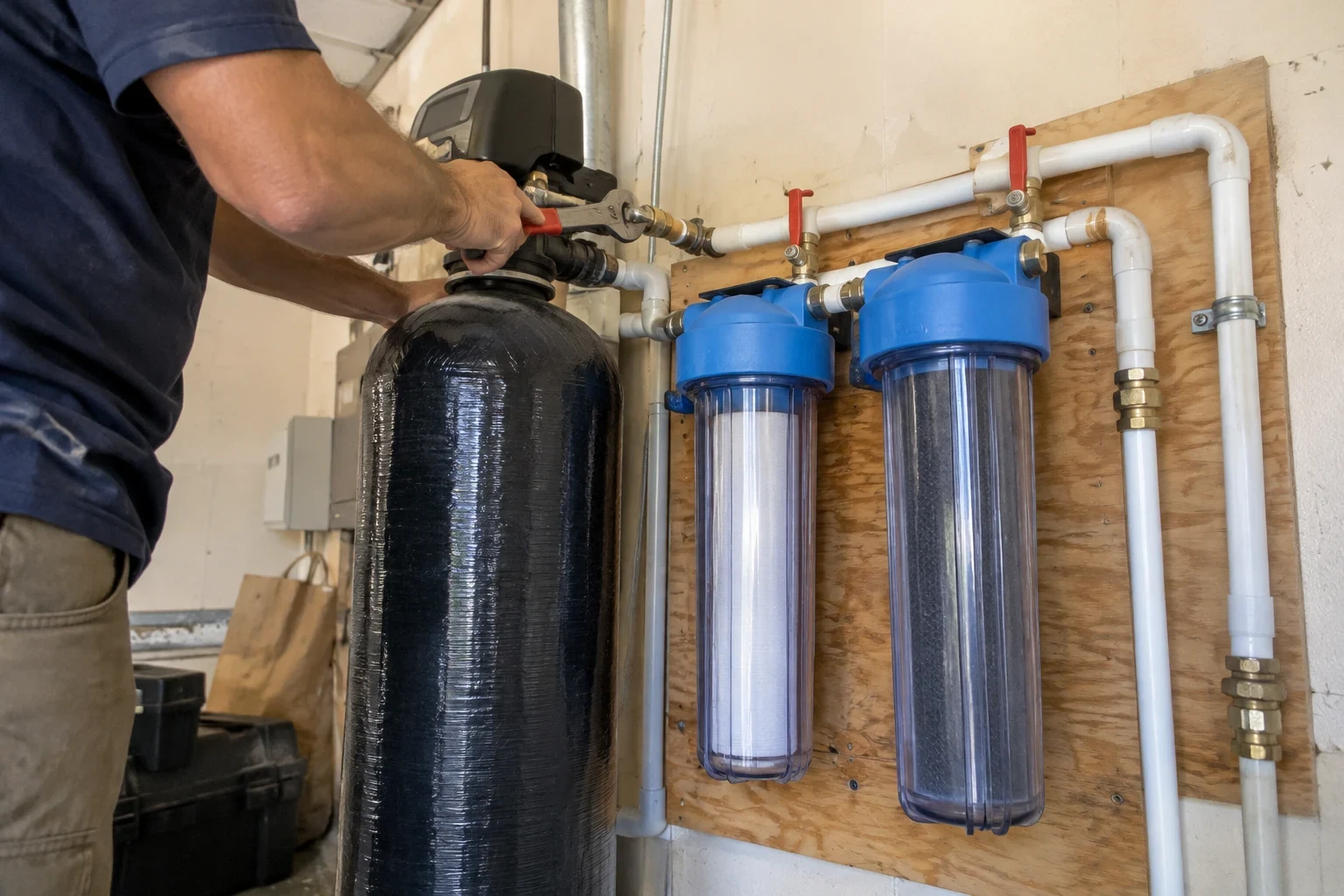
We install whole-home filtration systems that take chlorine taste and odor out of every tap in your home, from the kitchen sink to the shower. We shut the water off safely and keep the electrical ground intact. Every joint gets checked before we leave.
How whole-home filtration works and who it suits
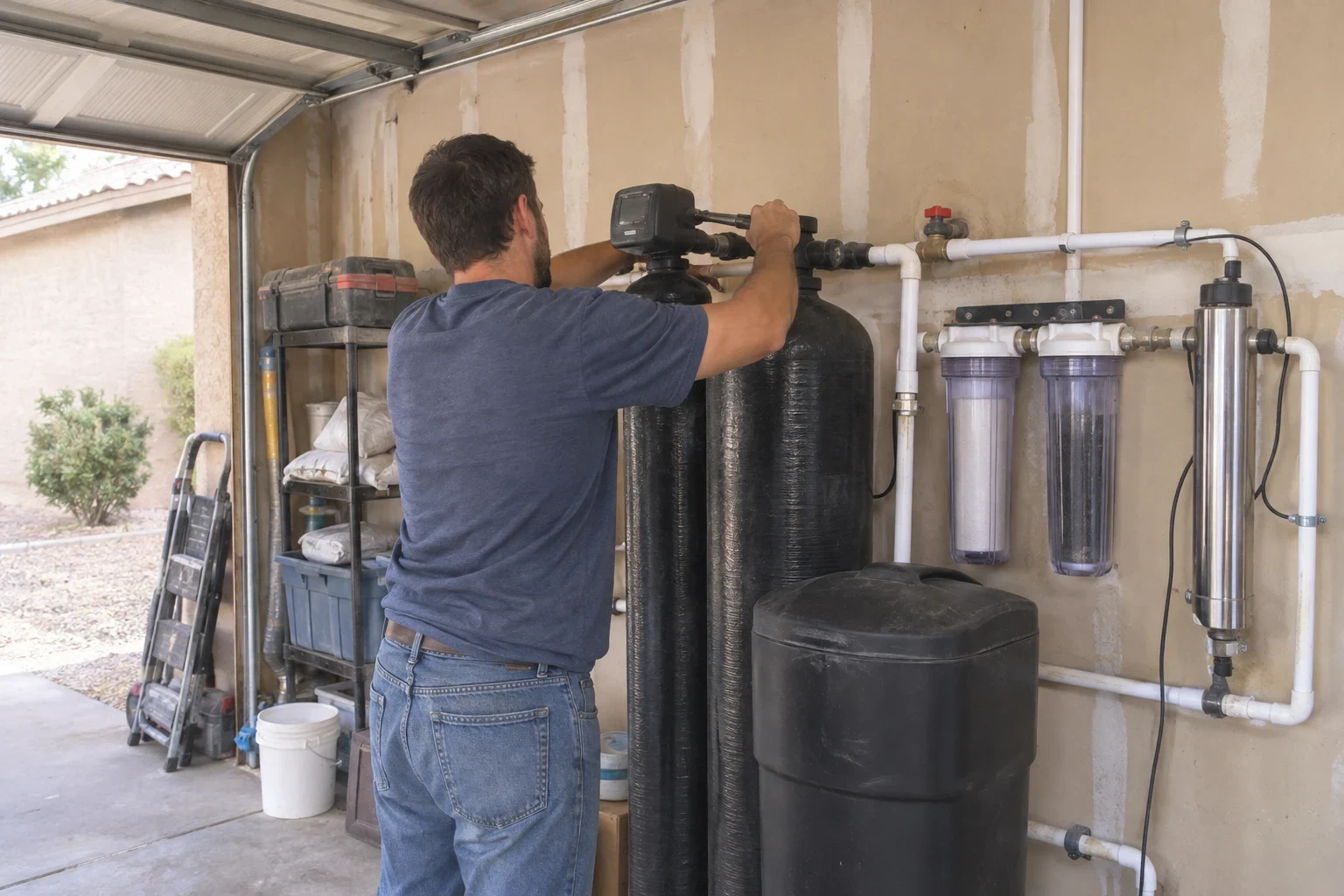
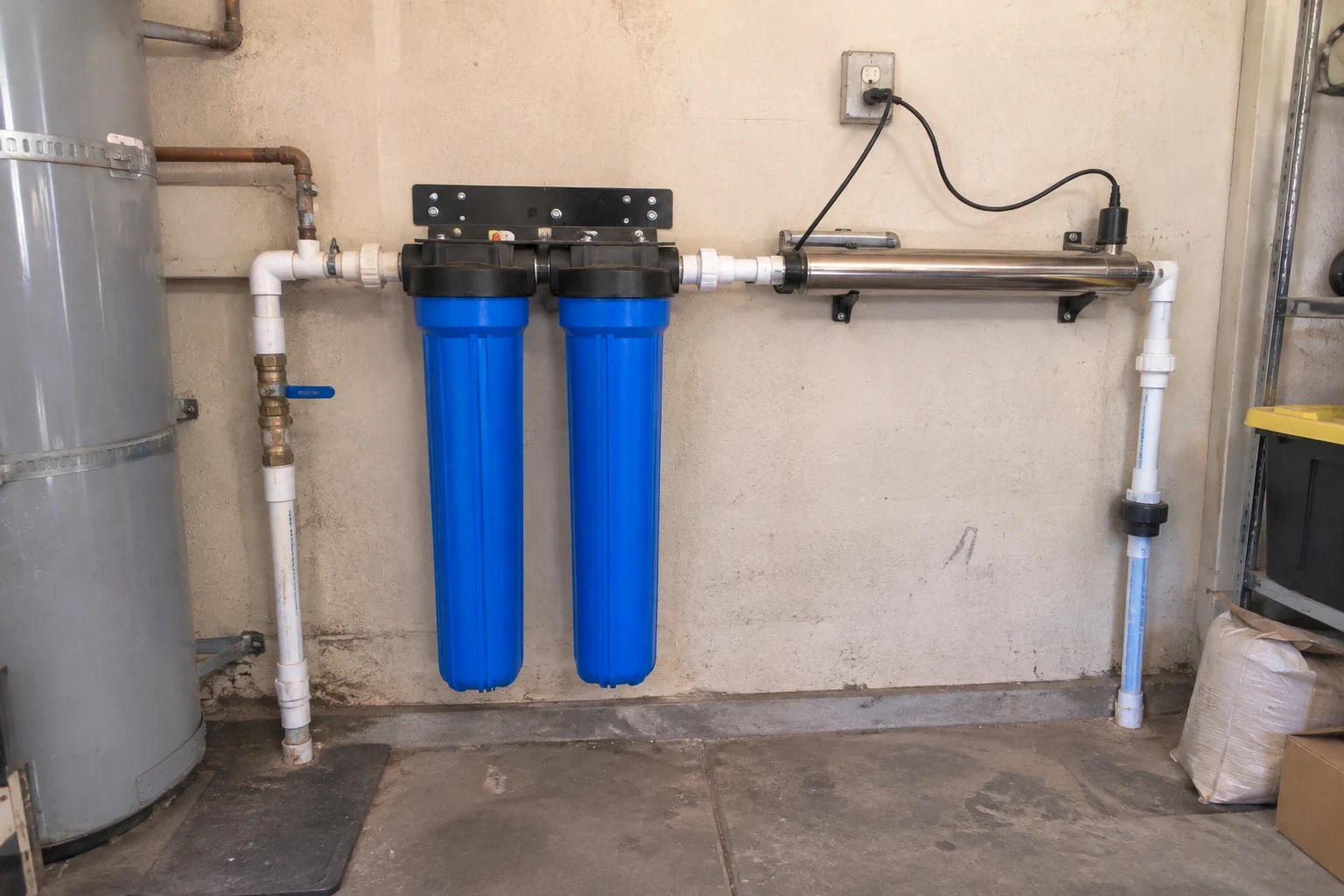
A whole-home filter goes on the main water line right where it comes into your home, usually in the garage or near the water heater. All the water you use runs through it first. Most systems we put in use carbon, which does a good job pulling out chlorine along with the taste and smell it leaves behind. A sediment stage in front catches grit before it can wear on valves and fixtures.
Filtering and softening are two different jobs. A filter deals with taste and smell. A softener takes out the hardness minerals that build scale on faucets and inside your water heater. Water across the Valley tends to run hard, so plenty of homes end up with both. We'll tell you straight which one fixes what you're seeing, and we won't sell you the second if you don't need it.
If your main worry is the water you drink and cook with, a Reverse Osmosis System under the kitchen sink may be the better place to start. We can go over that on the same call.
What comes with the install
- Carbon filter sized to your home
- We pick the tank or cartridge size based on how many bathrooms you have and how many fixtures tend to run at the same time. That keeps pressure steady when someone's showering while the dishwasher fills.
- Sediment prefilter
- Sand and grit get caught before they reach the carbon. The carbon lasts longer, and the valves downstream stay cleaner.
- Bypass valve
- We put in a bypass so water keeps flowing to the house if the filter ever needs service. You turn one handle instead of shutting down your whole home.
- Electrical bonding jumper
- In a lot of homes, the metal water pipe doubles as a path to ground for the electrical system. Cutting a filter into that pipe can break the path, so we add a bonding jumper around the new equipment to keep it connected. It's a small part, and it matters for your family's safety.
- Leak check and flush
- We bring the system up to pressure, check every joint and flush the new carbon until the water runs clear. Fine carbon dust in the first few gallons is normal, and we send it down the drain instead of into your fixtures.
- Coverage on the install
- The installation itself is backed by a 2-year installation warranty, so if a fitting or connection we made gives you trouble, we come back and make it right.
Signs your home could use whole-home filtration
A pool smell at the tap
If your tap water smells like chlorine, especially first thing in the morning, a carbon filter is the usual fix.
Showers that feel harsh
Some people find chlorinated shower water rough on skin and hair. A pitcher or faucet filter can't help there. A filter on the main line treats the shower too.
Grit in faucet screens
Flakes or sand in aerators and showerheads mean sediment is moving through your lines. A sediment stage stops it at the main line.
Buying bottled water for taste
If nobody in the family will drink from the tap because of the taste, filtering every faucet can change that.
Small filters everywhere
Pitcher filters and faucet attachments work, but keeping up with several of them gets old. One system at the main line is simpler to maintain.
What moves the price
We won't quote a number before we've seen how your water comes into the house. Your cost comes down to two things: the equipment you choose and the plumbing work needed to set it in safely. Before anyone cuts a pipe, you get the whole price in writing, item by item.
System size
More bathrooms means more carbon to keep flow and pressure steady. A bigger tank costs more on day one but usually runs longer before the media needs replacing.
Type of carbon
Standard carbon handles chlorine. Catalytic carbon or extra stages cost more, and we only bring them up when they match the problem you described.
Plumbing at the main line
If an earlier softener left a loop in place, the job is often simpler. New pipe runs, a relocated hose bib or a worn-out shutoff that has to be replaced all add parts and labor.
Pairing with a softener
Adding water softener installation on the same visit can share some of the plumbing work. We still list each system on its own line so the numbers stay clear.
Upkeep over time
Cartridge systems are cheaper to buy and need changes more often. Tank systems cost more up front and less to keep running. We lay out both before you decide.
How install day goes
- 1
Look before we cut
We find your main shutoff, make sure it closes fully, and check the pipe material and the space. If the shutoff is weak or stuck, we tell you before we start. A valve that won't close is a flooding risk, and we don't work around it.
- 2
Protect the work area
We lay down drop cloths and move things out of the way with your OK. Tools and open pipe never sit where kids or pets can reach them, and we tell you before the water goes off.
- 3
Install and bond
We shut off the water, drain the line and set the filter with its bypass. Where the pipe is part of the ground path, the bonding jumper goes on before the water comes back.
- 4
Test, flush and walk through
We bring pressure up slowly, look at each joint for drips and flush the carbon. Then we show you the bypass, the main shutoff and when the filter media will need changing.
Whole-home filtration questions
Will a whole-home filter lower my water pressure?
A properly sized filter shouldn't cause a drop you'd notice. Weak pressure usually traces back to a filter that's too small or a cartridge left in too long. We size the system to your home's flow so it keeps up when several taps run at once.
Will a filter fix hard water too?
It won't. The carbon handles chlorine, and the sediment stage traps sand and grit. Calcium and magnesium, the minerals behind scale, pass right through. A water softener is the tool for those. Plenty of homes have both, and we set the filter first in line so chlorine stays off the softener resin.
Do I still need a reverse osmosis system?
Not always. A whole-home filter improves the water at every tap. A reverse osmosis system goes further for drinking and cooking water at one sink. Some families want both, and some find the whole-home filter is enough.
How often does the filter need service?
That comes down to the type of system you pick and how many gallons your household runs through it. Cartridges get swapped more often than the media in a larger tank. When we finish, we leave you a simple schedule, and the bypass valve makes each change quick.
What warranty comes with the install?
Our labor on your whole-home filtration install is covered for 2 years. If you add a water softener, its salt tank, resin tank and valve body carry a lifetime warranty.
Is it safe to have the work done with kids and pets home?
Yes, with a little planning. We keep the work area clear, never leave open pipe or tools unattended, and let you know before the water goes off and when it comes back on.
Talk with us about filtering your home's water
Tell us what you notice in your water, like a chlorine smell or grit in the showerhead, and whether your main line comes in through the garage or an outside wall. We'll explain which system fits and how install day would run, and you'll have the written price before any pipe gets cut. We work in Peoria and nearby towns like Surprise and Sun City.