ServicesWater Softener Installation
Water Softener Installation in Peoria
We put in water softeners the careful way. That means a bypass valve you can reach, a drain line that can't backflow, level tanks, and every joint checked before we leave. You get softer water and a system that is safe to live with.
A softener, put in the right way
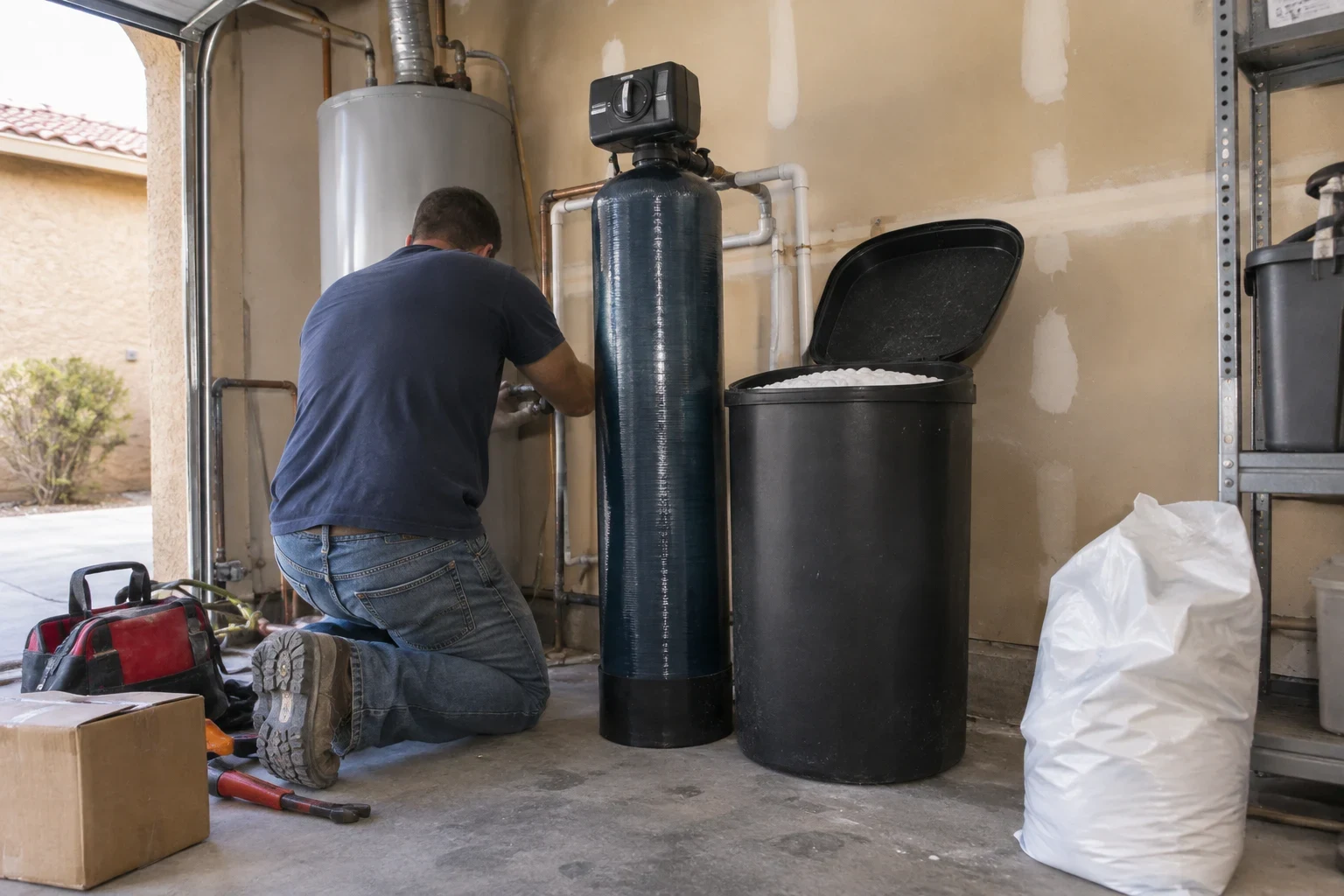
A water softener removes the calcium and magnesium behind the white crust on faucets, the spots on glasses and the scale that builds up inside your water heater. Resin beads in the tank swap those minerals out for sodium. On a set schedule, the system cleans itself with brine drawn from the salt tank.
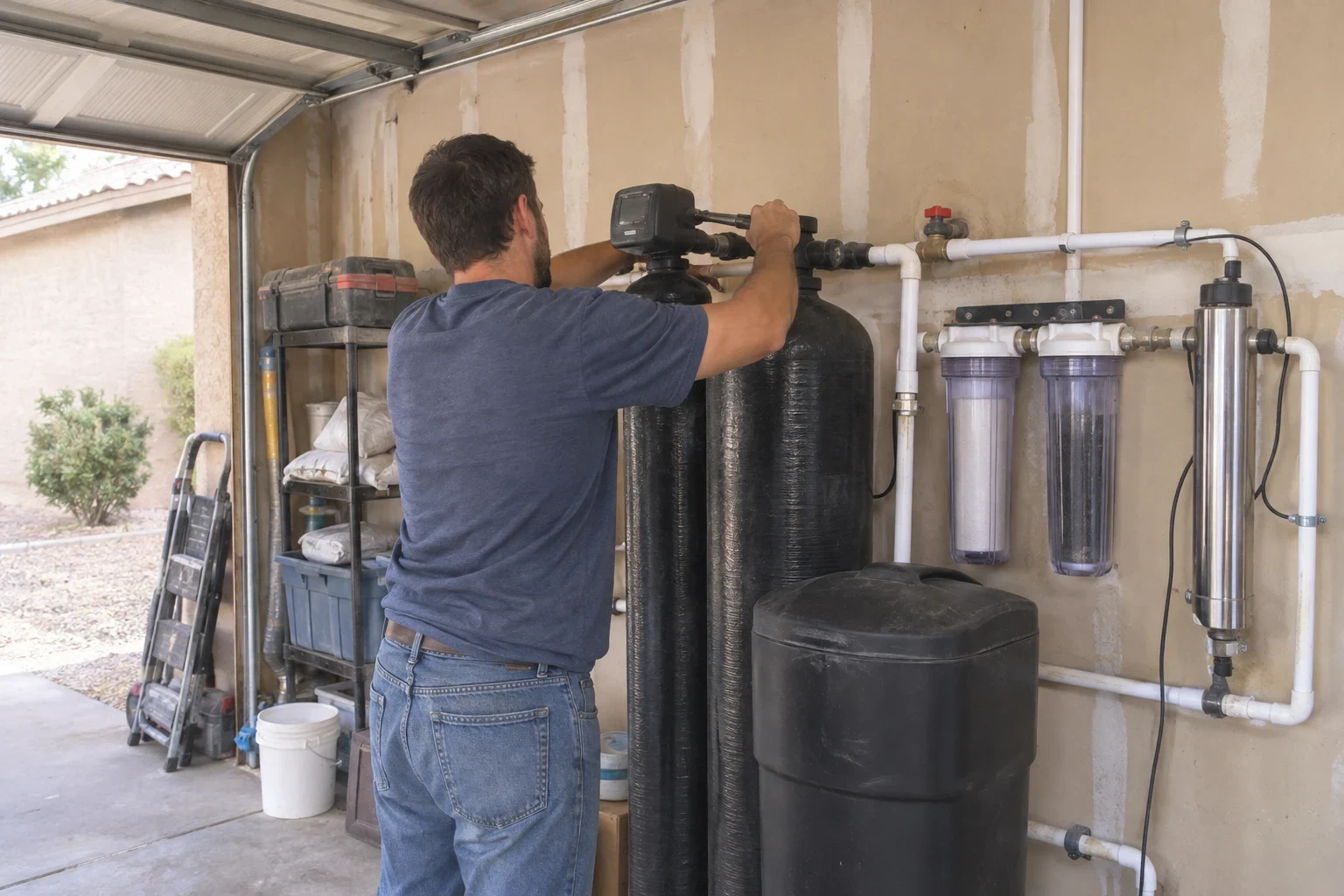
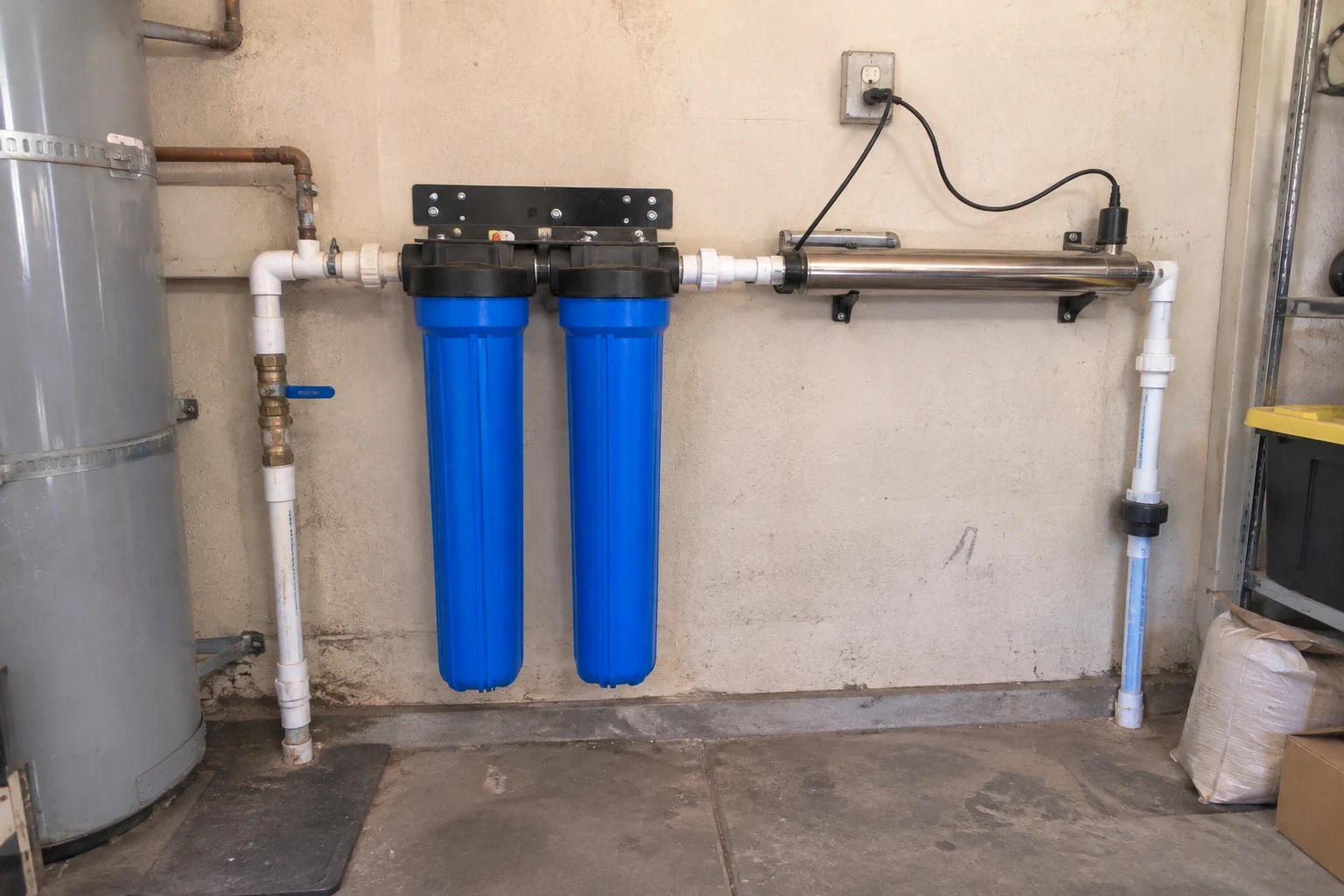
Most of the job is plumbing, and that is where safety matters. The softener ties into your main water line. It needs a drain and an outlet, and it gets heavy once it holds water and salt. We install it so it can't send dirty water back into your supply, so you can shut it off quickly, and so it rests level on a firm surface.
Plenty of newer houses around Peoria came with a softener loop already plumbed into the garage, and that makes the job simpler. If your home doesn't have one, we explain what adding it involves before we touch a pipe.
What every install includes
Sizing to your home
We pick the tank size based on how many people live in your home, how much water you go through and the hardness reported for your supply. An undersized tank runs out of soft water by evening. An oversized one burns through salt for no reason.
A bypass valve you can reach
Each system comes with a bypass valve. If there is ever a problem, you can take the softener out of the line and keep water flowing to the rest of the house. Before we leave, we point it out and have you turn it once yourself.
Drain line with an air gap
The brine rinse needs a place to go. We set that line up with a proper air gap, so rinse water has no path back into the water you drink.
Safe power and placement
The control valve runs off a nearby outlet. We route the cord up off the floor and clear of the drain, and we level both tanks so their weight doesn't strain the fittings.
Startup and leak check
We add salt, program the regeneration schedule and flush the system. Every joint then gets checked with the water under pressure before we sign off.
When hard water starts showing up around the house
- Chalky buildup on faucets
- A crusty white ring around taps, shower heads and the dishwasher door is mineral scale. You can scrub it off, but it comes right back.
- Cloudy glasses and shower doors
- Dishes come out with spots and the glass shower door never looks clean. That haze is minerals the water leaves behind when it dries.
- Noise from the water heater
- Popping or rumbling while the heater runs usually means scale has collected at the bottom of the tank. The heater works harder to heat through it, and its life gets shorter.
- Soap that barely suds
- Minerals fight soap, so you use more shampoo and detergent to get the same result. Skin may feel dry and tight after you shower.
- A softener that stopped working
- Salt sits untouched, the water feels hard again, or there is a puddle under the tank. We can take out the old unit and connect a new one to the same loop.
How the install day goes
- 1
Talk it through by phone
You tell us about your home, how many people live there and where the old unit or loop sits. We go over sizing and what affects the price, then set a day that works for you.
- 2
Water off, floors covered
We shut off the main, drain the line and lay down mats where we work. If an old softener is coming out, we empty it and move it out without dragging it across your floors.
- 3
Plumb, drain and power
We tie the softener into the line, add the bypass valve, run the drain with its air gap and connect power. If the job calls for a permit, we pull it.
- 4
Startup, walk-through, cleanup
We fill the salt tank, set the controls and check for leaks. Then we show you the bypass and the salt level, haul away the old unit and packaging, and sweep up.
What goes into the price of your install
No two installs are quite the same, so we walk you through the price before anyone picks up a tool. The biggest swings come from the plumbing we find and the size of system your home calls for. You get the whole figure up front, with nothing added on after the work is done.
- Whether the plumbing is ready
- Many homes were built with a loop waiting for a softener, and tying into one is quick work. Where there is no loop, we have to build one, which means extra pipe, extra fittings and a longer day.
- How big a system you need
- A bigger household uses more water, so it needs a larger resin tank and valve. That costs more on install day, but the softener doesn't fall behind when everyone showers in the evening.
- Distance to a drain and an outlet
- The brine rinse has to drain somewhere, and the control valve needs power. If the chosen spot is far from both, we run them over, and the length of that run and how hard the wall is to open both play into the price.
- Taking out the old softener
- Removing a tired unit takes extra time. Corroded fittings that need replacing add a bit more.
Softener install questions we hear most
- How much of the day will the install take?
- With a loop already in place, it usually runs a few hours. A new loop or a fresh drain run makes for a longer visit. Tell us how your home is plumbed when you call, and we can give you a realistic time estimate.
- Will my water be shut off the whole time?
- No, only for part of it. We need the main off while we cut into the line. Once the bypass valve is installed, your water can come back on while we finish starting up the softener.
- Does softened water add sodium?
- A small amount, yes, and it is safe to drink. If someone in the house is limiting sodium, we can leave the kitchen cold tap unsoftened. Another option is a reverse osmosis system at the kitchen faucet for the water you drink and cook with.
- How is the work covered after you leave?
- You get a 2-year labor warranty on our work and a 2-year installation warranty on the install. The salt tank, resin tank and valve body are each covered by a lifetime warranty.
- Is the garage an OK spot for the softener?
- It is where most of them go. Peoria summers get a garage very hot, so we keep the unit out of direct sunlight and set it where a car bumper or bike won't knock into it.
- Who keeps the salt tank filled?
- The tank has to stay stocked for the softener to work. If carrying heavy salt bags is a chore you'd rather skip, our automated salt delivery service brings salt to you on a set schedule.
Let's get your softener planned
Give us a rough picture of your home and the spot where the softener will sit. We'll go over the right size, the steps on install day and the price, so you know what to expect before we show up.